The Era of Selling What You Know Is Ending
10 June 2026
I’ve sat in a lot of training rooms over the last ten years. Watched a lot of presentations, attended a lot of talks. And somewhere along the way, a pattern started to surface that I couldn’t unsee.
Most of it was built around knowledge. Frameworks, models, citations, evidence, case studies, methodologies. The architecture of expertise as we’ve come to recognise it. Confident, credentialed, well-researched.
What was harder to find was thinking.
Not absence of intelligence. The opposite. The rooms were full of bright people who’d absorbed an extraordinary amount. But the work they were presenting tended to be a careful synthesis of what they knew, rather than a clear expression of what they actually thought. Where they stood. What they believed. What they’d do, and why.
That distinction didn’t seem to matter much, for a long time. It does now.
The Architecture of Knowing
For most of recent professional history, expertise was built on what you knew. The qualifications you held, the books you’d read, the frameworks you could deploy, the cases you could cite. Authority was demonstrated through accumulation. The deeper your reservoir, the more credible you became.
This worked because knowledge was scarce. It took years to acquire. It lived inside people, behind paywalls, in expensive courses and inaccessible institutions. The expert was the bridge between the abundance of questions and the scarcity of considered answers.
And there was a comfort to building authority this way. Knowledge is defensible. You can footnote it, attribute it, evidence it. When challenged, you can point to where it came from. When you’re not sure, you can reach for someone else’s thinking, well-sourced, to support your case.
When Knowledge Becomes Free
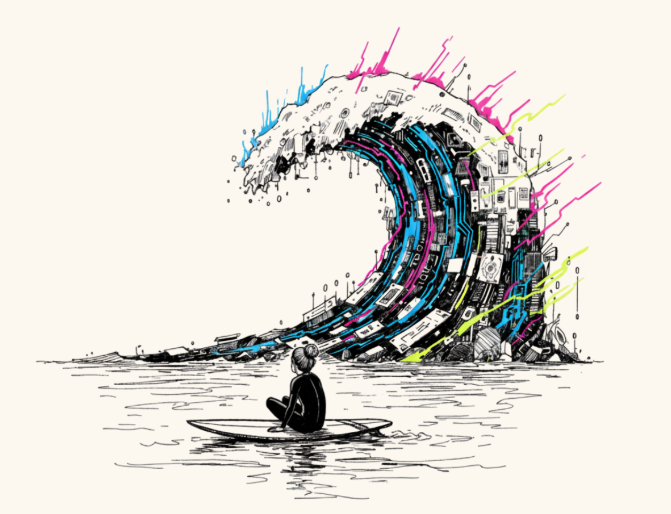
The thing that’s changed, of course, is that the bridge has collapsed.
Knowledge isn’t scarce anymore. The reservoir most experts spent decades filling can now be approximated, in seconds, by anyone with a halfway decent prompt. The frameworks, the citations, the carefully-curated synthesis. All of it sits one query away.
Which is what makes the current moment so disorientating for so many experts. The thing they built their authority on, the thing the market once paid for, has become a commodity. Available everywhere. Instantly. Free.
But what AI cannot do, and what it has never been able to do, is think. Not in the way a person thinks. It can remix knowledge. It can stitch together plausible-sounding patterns. What it cannot do is hold a position. Take a view. Disagree with the consensus when the consensus is wrong. Sit with ambiguity and arrive at judgement rather than answer.
That gap is where the value is moving to.
The era of selling what you know is ending. The era of selling what you think is just beginning.
Why Thinking Is Harder
If thinking is what matters now, you’d expect a fairly straightforward pivot. Stop leading with what you know. Start leading with what you think.
In practice, it doesn’t work that way. And the reason is worth sitting with.
Selling what you know is safe. It’s defensible, credentialed, footnoted. Selling what you think is exposed. It can be wrong. It can be disagreed with. It can be quoted back at you in five years’ time when the ground has moved. It puts you in the line of fire in a way that knowledge, properly attributed, never did.
Most experts weren’t trained for that sport. They got to the top of their field on the opposite skill. The careful synthesis. The well-sourced argument. The non-controversial position carefully hedged. The very habits that built their authority are the ones that now make this transition so uncomfortable.
There’s a quieter problem underneath that. A lot of experts have absorbed an enormous amount of thinking over the years. Books, conversations, frameworks, mentors, models. For a long time, that absorption was enough. Now AI absorbs more, faster, and remixes it on demand.
An Audit Worth Doing
Try this. Look back at the last ten pieces of content you’ve produced. The last ten client conversations you’ve had. The last ten talks you’ve given.
How much of it was what you know? How much was what you think?
It’s a useful exercise because it tends to surprise people. Experts who consider themselves opinionated and clear in their views often find that the actual evidence of their output tells a different story. Lots of synthesis. Lots of frameworks. Lots of “here’s what the research says” and “here’s how this typically works.” Comparatively little of “here’s where I stand and why.”
That’s not a failure of intelligence. It’s a habit. A career-long pattern. And like any habit, it doesn’t shift on its own.
Where This Leaves Us
There’s no urgency to this in the sense that the world will end if experts don’t make the shift. The market won’t punish anyone overnight. The reputational scaffolding most experts have built will hold for a while yet.
But the centre of gravity is moving. Quietly, steadily, and not in favour of the cautious synthesiser. The experts who continue to lead with what they know, well into a world where what they know is freely available, will find themselves competing in a sport that no longer pays.
The ones who learn to lead with what they think, even when it’s uncomfortable, even when it’s exposed, will be doing the only thing left that’s hard to replicate.
The work, then, is internal before it’s external. Less about producing more content. More about earning the right to a clearer voice.
Knowing what you think. And being willing to say it.
Keep your edge in the age of AI.
Regular updates on expertise, AI, and the evolution of Expert OS - delivered direct to your inbox.
We respect your inbox. No spam, just meaningful updates. Unsubscribe anytime.