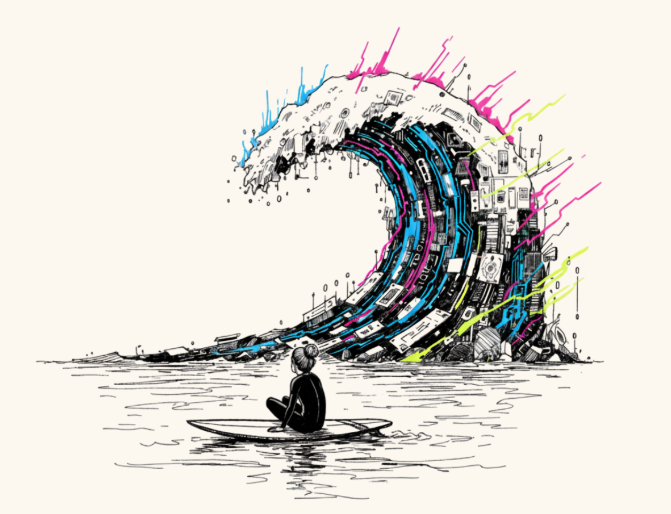
AI Integration Isn’t a Project
14 April 2026
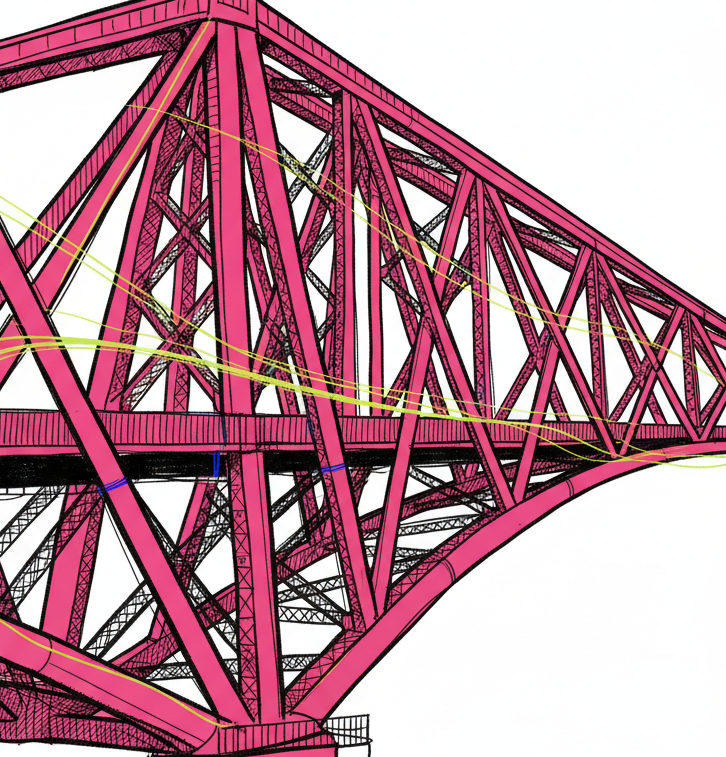
Growing up with Scottish grandparents, I was told that the Forth Bridge is never finished being painted. The moment you reach one end, it’s time to start again at the other.
I’ve been thinking about that a lot lately.
In the last month alone, we’ve been deep in experimentation with new tools — Antigravity, Obsidian, Claude Skills — and with each one, the same quiet question resurfaces: when will we finally feel on top of this?
I’ve stopped waiting for that feeling.
What the People Doing It Well Have in Common
There’s a version of AI integration that most people are chasing — the moment where the tools are chosen, the systems are set, and the whole thing just hums along. A finish line. A settled state.
It doesn’t exist. And that’s not a failure of effort. It’s just the nature of the thing.
The experts I speak to who are integrating AI thoughtfully — not breathlessly, not reluctantly — share one thing in common. They’re not treating it as a project. Projects have endpoints. What these people have understood is that AI integration is more like a discipline than a deliverable. Something you return to, rather than something you finish.
More specifically: they’ve baked AI review into their weekly rhythm. Not as an occasional deep dive, but as a standing agenda item — sitting alongside sales figures and client delivery milestones. The question isn’t “what should we do with AI?” asked once a year. It’s “what have we learned this week, and what does that change?” asked constantly.
On the Feeling of Being Behind
The pace of AI development triggers a specific kind of anxiety in high-achievers — the fear of making the wrong bet, of having spent time on something that turns out to be redundant. For people used to being the sharpest in the room, not knowing which direction to move is genuinely uncomfortable.
But the unsettled feeling isn’t a sign that you’re behind. It’s a sign that you’re paying attention.
The experts who don’t feel unsettled have probably already made a fixed decision — picked a tool, called it done, and stopped looking. That might feel like confidence. But in a landscape moving at this pace, premature certainty is its own kind of risk.
If the overwhelm is persistent — and for most of us working at this frontier, it is — the question worth asking isn’t how do I resolve this discomfort? It’s how do I work well inside it?
Deep expertise was never about having all the answers. It was always about knowing which questions to keep asking. That instinct is exactly what this moment requires.
The Forth Bridge doesn’t need finishing. It just needs painting.
Keep your edge in the age of AI.
Regular updates on expertise, AI, and the evolution of Expert OS - delivered direct to your inbox.
We respect your inbox. No spam, just meaningful updates. Unsubscribe anytime.